


The glossy floors you see in showrooms and hotel lobbies are the result of a methodical process, not a single treatment. Here is what actually happens when a concrete floor is polished, and where the two main approaches differ.
Two ways to polish concrete
Mechanically polished concrete is the more involved of the two. The surface is refined through many passes with progressively finer diamond tooling, and a densifier is applied that reacts chemically with the concrete to harden it. Our mechanically polished process runs through a detailed sequence of diamond tooling, grout and densifier steps.
Grind and seal is the more affordable approach. The surface is ground back and scratches removed, then a sealer is applied to create the sheen. It involves roughly half the steps, and sealers are available in matte, satin or high gloss. A sealed finish will need refreshing over time as the coating wears, while a mechanically polished floor can be re-polished.
Step 1 — Preparation
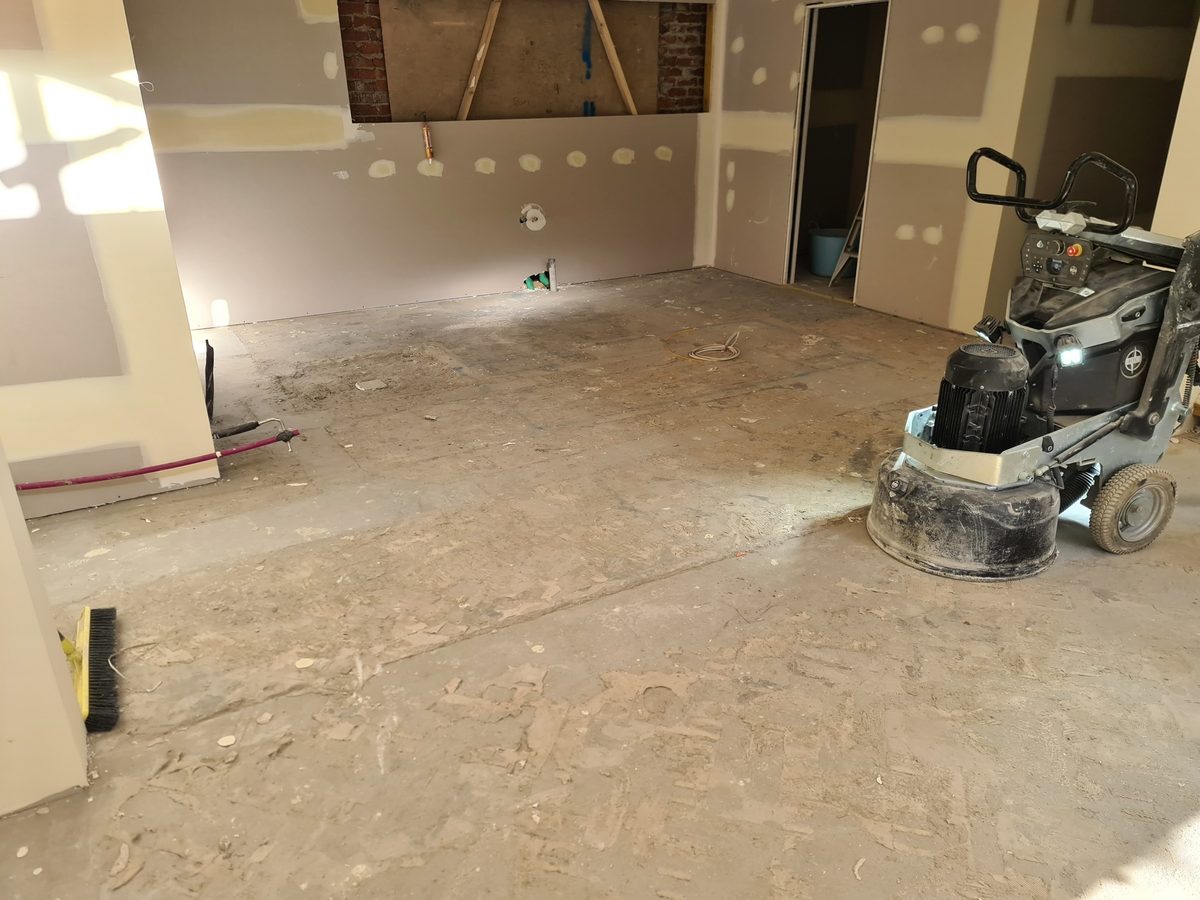
Polishing is done on a dry, sound surface. Preparation means removing existing floor coverings, adhesives and coatings, and dealing with cracks and defects. Operators wear appropriate protective equipment, and we use professional planetary grinders with industrial dust-extraction equipment to control dust.
Step 2 — Grinding and repairs
The first grinding passes take off surface finishes, working in overlapping lines across the whole area so nothing is missed. How completely a coating or adhesive lifts depends on what it is and how deep it has gone. Chips, scratches and holes are ground out and filled with a patching compound, and the surface is cleaned of excess material. For a grind and seal floor, this is the point at which sealing takes place.
Step 3 — Polishing
Polishing continues with progressively finer diamonds until the target clarity is reached, finishing with a grit chosen to match how reflective you want the floor. Non-diamond burnishing pads can be used for a final sheen.
Step 4 — Finishing
The area is cleaned down thoroughly, and the sealer or protective treatment appropriate to the system is applied and left to cure. Curing time varies with the treatment chosen. After that, the floor just needs a sensible cleaning routine.
This guide is general information based on our experience on the Mornington Peninsula, not advice for a specific project. Every slab is different, product performance depends on the manufacturer’s specifications, and we assess each floor on site before quoting.
Related pages
Thinking about a concrete floor?
Tell us about your space and we will come back to you with a free, no-obligation quote.