

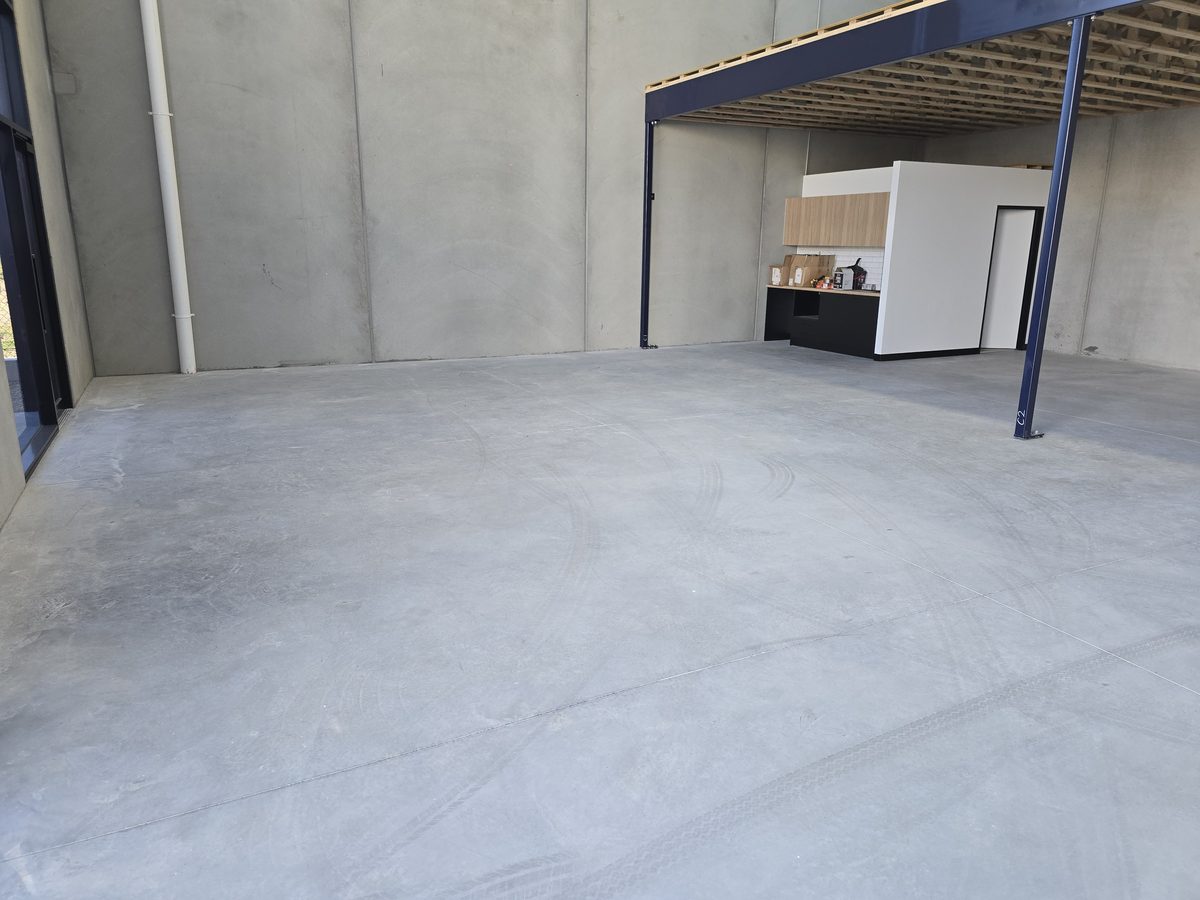

Industrial floors take punishment: heavy loads, constant traffic, machinery and spills. Polished concrete has become a common answer because it hardens the surface you already have rather than adding a covering that will fail under that use.
Why it suits industrial spaces
- Hard-wearing — resists the abrasion of constant traffic in factories, warehouses and plants
- Low maintenance — routine cleaning plus occasional re-polishing is usually all that is required
- Cost-effective over time — a longer service life and lower upkeep than many coated alternatives
- Easy to clean, with no grout lines or seams to trap contaminants
- Light-reflective, which can improve visibility on a working floor
Preparation determines the outcome
For industrial slabs especially, the preparation stage decides how the finished floor performs. That means levelling out unevenness, repairing cracks and defects before polishing, and removing oils and contaminants that would otherwise prevent proper bonding and treatment.
Unevenness left in place tends to reappear as premature wear or cracking in the traffic paths.
Cleaning and maintenance
Regular sweeping and mopping stops grit embedding into the surface, which is the main cause of dulling on an industrial floor. Depending on wear, periodic re-polishing restores the finish, and dealing with chips or cracks early stops them spreading.
Where a floor has been neglected, a factory clean and dust seal is often the practical first step before deciding whether polishing is worthwhile.
Related pages
Thinking about a concrete floor?
Tell us about your space and we will come back to you with a free, no-obligation quote.