

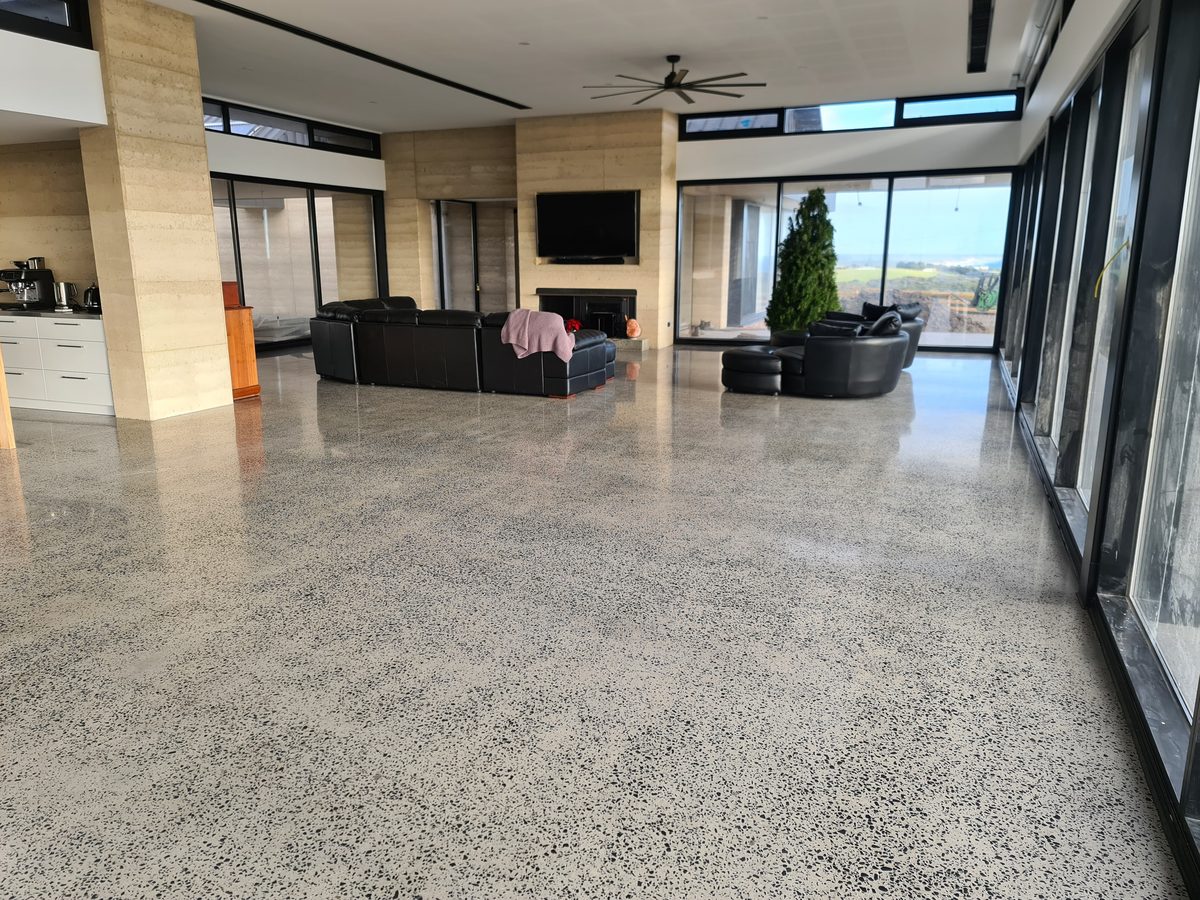

Polished concrete has become a mainstream flooring choice for homes and businesses alike. This guide covers what it is, what it offers, and the settings it suits — so you can judge whether it fits your project.
What is polished concrete flooring?
Polished concrete transforms a standard slab into a smooth, refined surface through a series of mechanical grinding and polishing steps using diamond abrasives, finished with an appropriate sealer or densifier. Rather than laying a new floor over the slab, it makes the slab itself the finished floor.
The benefits
- Durability — stands up to heavy traffic in both commercial and domestic settings
- Low maintenance — regular sweeping and occasional mopping keeps it looking good
- Long lifespan, which makes it cost-effective over the life of the floor
- A modern, high-clarity appearance with a range of exposure and sheen options
- Uses the existing slab rather than requiring additional floor coverings
- Reflects natural light, which can make a space feel brighter
Where it works
Residential — living areas, kitchens and open-plan spaces, where the durability suits family use.
Commercial — retail, showrooms and offices, where appearance and hard wear both matter.
Industrial — warehouses and manufacturing floors, where surface hardness and easy cleaning are the priority.
Outdoors — a polished finish is not the right answer outside. For patios, pool surrounds and pathways, a textured pavilion finish is designed for the job.
Choosing an installer
Polished concrete is a craft process: the same slab can produce very different results depending on preparation, tooling and the number of passes. Ask what preparation is included, what exposure level is being quoted, and what the finish will look like on your slab specifically.
Related pages
Thinking about a concrete floor?
Tell us about your space and we will come back to you with a free, no-obligation quote.