

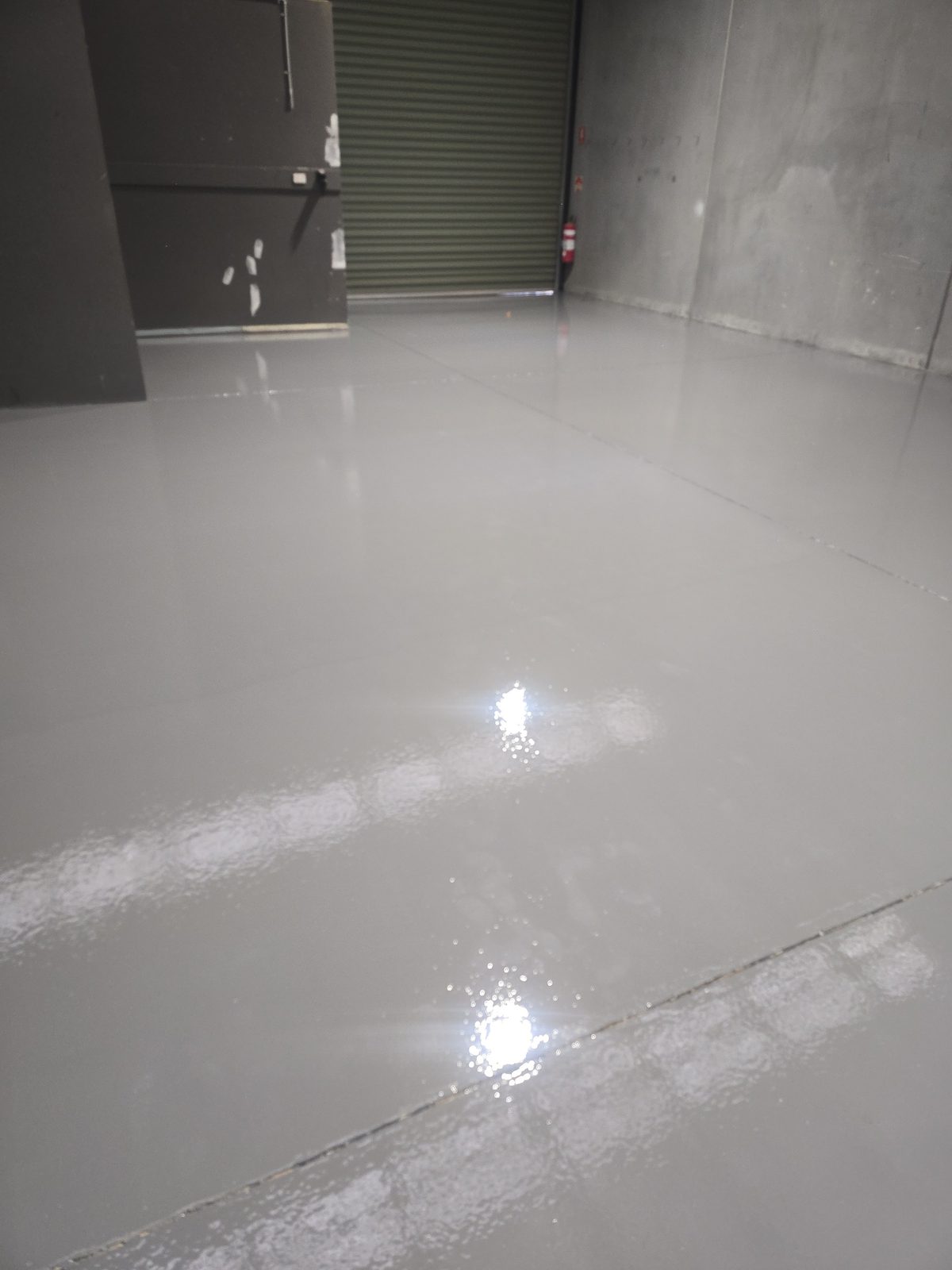

Sealers and coatings can change how a concrete floor responds to water, spills, wear, cleaning and exposure. There are several families of product, they behave very differently, and the most expensive or "hardest" option isn’t automatically the right one for your floor. This guide explains the main types in plain language, what each is good and less good at, and the questions worth asking before you choose. It’s written for homeowners first, but it’s just as useful for builders, designers and commercial property owners weighing options on the Mornington Peninsula. One thing up front: performance varies a lot between brands and formulations, so where exact figures matter — cure times, chemical resistance, UV behaviour, slip ratings — the manufacturer’s data sheet is the authority, not a general article like this one.
A quick note on what we install
To keep this honest, we’ve flagged each product family below. Two things to note: we don’t install every product mentioned — including a chemistry here isn’t a claim that we do; and the "service" labels are drawn from what our website currently describes, which is evidence of a stated offering rather than a guarantee that a specification remains current, so treat anything specific as worth reconfirming. The flags are:
- Described on the current website — presented as part of our work: penetrating sealers, topical grind-and-seal sealers/coatings, and epoxy (the last as a secondary service).
- General educational — included so you understand the market; not necessarily something we install.
- Please confirm with us — worth asking about for your specific project before relying on it.
The big divide: penetrating vs film-forming
The most important distinction is where the product sits.
Penetrating sealers soak into the concrete and work from within, leaving the surface looking close to natural (little or no added gloss). "Penetrating sealer" is a broad category, though: some products primarily repel water, some may also resist oils or particular stains, and performance against water, oil, chemicals and staining has to be checked for the specific product — not every penetrating sealer provides general stain resistance. Because there’s no conventional topical film, there’s nothing to peel or wear through, but that isn’t the same as low-maintenance: it may still need periodic reapplication and doesn’t necessarily make cleaning or stain management easier in every setting. (Densifiers — chemical hardeners used in polishing — work differently again and shouldn’t automatically be called sealers.) (Penetrating sealers are described on the current website.)
Film-forming (topical) coatings sit on the surface as a layer you can see and feel. That film is what delivers the gloss, the colour depth and much of the stain and chemical protection — and it’s also the part that wears, so it can eventually need renewal or recoating. Grind-and-seal floors use film-forming sealers or coatings. (Topical sealers/coatings used in grind and seal are described on the current website.)
Neither approach is universally better. Penetrating products are often chosen where a natural appearance and no conventional topical film are priorities. Film-forming products can be selected where particular appearance, wear, stain or chemical-resistance characteristics are required. The suitability and maintenance requirements of either option depend on the product, slab and environment.
Water-based vs solvent-based
Within film-forming products, you’ll also hear "water-based" versus "solvent-based." These terms describe the product’s carrier — how it’s thinned and applied — not its whole chemistry or performance level, and neither alone determines durability, UV resistance, stain resistance or suitability. Broadly, solvent-based products have traditionally been valued for penetration and a richer "wet look," while water-based products have lower odour and are often easier to use indoors; modern water-based systems can perform very well, so treat this as a factor to discuss for your setting (ventilation, occupancy, timing) rather than a ranking. Our website currently describes a water-based two-pack epoxy clear coat for microcement; the current project specification should be confirmed before relying on that.
The main coating families
Acrylic sealers — general educational. Typically thinner film-forming sealers, relatively easy to apply and re-apply, often used to enhance colour and give a light-to-moderate sheen. They’re generally less abrasion- and chemical-resistant than heavier coatings and usually need more frequent recoating. Common on decorative and some outdoor concrete. Confirm with us whether an acrylic system suits your project.
Epoxy coatings — described on the current website (secondary). A film-forming family often chosen for garages, workshops and industrial floors, where suitable formulations can offer high chemical and abrasion resistance — though this is formulation-dependent, so check the product’s data. A common trade-off is UV behaviour: many epoxies are prone to yellowing or chalking under UV, so they’re often better suited indoors unless specified otherwise. Epoxy is one of our services, though a secondary one rather than our main focus.
Polyurethane coatings — general educational / please confirm. Often used as tough, more flexible topcoats, sometimes over an epoxy base. Many offer good abrasion resistance and better UV stability than typical epoxies — but this is product-specific and can’t be assumed across the board. Ask us whether this suits your floor.
Polyaspartic coatings — general educational / please confirm. A fast-curing family that can allow quick return to service and often has good UV stability, making them popular for rapid installs. Fast cure can also make them less forgiving to apply, so workmanship matters. Performance varies by product. Confirm with us before assuming this option.
Penetrating sealers — described on the current website. As above — absorbed into the slab for a natural look and reduced porosity, without a wear layer on top.
Comparison at a glance
General tendencies only — real performance depends on the specific product, the slab, preparation and application. "Status" shows how each relates to our services.
| Product family | Penetrating or film | Typical look | UV / yellowing | Abrasion & chemical | Status for us |
|---|---|---|---|---|---|
| Penetrating sealer | Penetrating | Natural, little added gloss | Generally stable; check product | Varies by product; no topical wear layer — check data | On current website |
| Acrylic sealer | Film (thin) | Light–moderate sheen, colour pop | Varies; some chalk outdoors | Generally lower; more frequent recoat; check data | General educational |
| Epoxy | Film | Gloss, colour, high build | Many yellow under UV; check product | Often high in suitable formulations; check product data | On current website (secondary) |
| Polyurethane | Film | Matte–gloss topcoat | Often better than epoxy — product-specific | Often good in suitable formulations; check product data | General / confirm |
| Polyaspartic | Film | Matte–gloss, fast cure | Often good — product-specific | Often good in suitable formulations; check product data | General / confirm |
What actually matters when choosing
Appearance and gloss. Decide the look — natural and low-sheen, or glossy and rich — because it narrows the field quickly.
UV stability and yellowing. For sunlit or outdoor areas this is critical, and it’s product-specific: some coatings yellow or chalk in UV, others resist it. Don’t assume a whole family behaves one way — check the specific product.
Abrasion and chemical resistance. Match this to real use: a quiet living room and a busy workshop have very different demands, and a floor exposed to particular chemicals needs a product rated for them.
Moisture. Moisture moving through a slab can affect any finish and can cause a film-forming coating to blister or delaminate if conditions exceed the product’s specification. Moisture should be assessed before committing to a system.
Recoatability and maintenance. Some films are easier to refresh than others. Consider the whole-of-life pattern: a cheaper coating that needs frequent recoating may not be cheaper over time.
Cure time and return to service. This ranges from fast (some polyaspartics) to slower — it matters a lot for a working home, a shop that can’t close for long, or a tight build program.
Indoor vs outdoor. UV, temperature, moisture and slip all shift the answer between inside and outside; a great indoor coating can be a poor outdoor one.
Slip resistance. No coating should be assumed to provide suitable slip resistance based on its chemistry or gloss description alone. Texture, aggregate or additives, application rate, wear, contamination, cleaning regime and wet conditions all affect how a floor performs underfoot. Where slip resistance matters, it should be specified and verified for the intended environment rather than taken for granted.
Why preparation and application quality matter most
With coatings, the product is only half the story. Even an excellent coating will underperform if the surface isn’t properly prepared — cleaned, profiled and free of contamination — or if it’s applied at the wrong film build, in poor conditions, or without the right recoat timing. Good surface preparation and careful application are what let a product reach its data-sheet performance. This is a big reason the "hardest" or most expensive coating isn’t automatically the best result: a premium product can underperform if preparation or application is inadequate, while a correctly selected and properly applied system has a better chance of achieving its stated performance.
The bottom line
There’s no single best sealer or coating — only the best fit for your floor, its use, the conditions and your maintenance expectations. Penetrating sealers keep things natural and simple; film-forming coatings can add gloss, and — through an appropriately selected system — toughness and chemical resistance, at the cost of eventual renewal. Within the film-forming families, epoxy, polyurethane, polyaspartic and acrylic each trade off UV stability, durability, cure speed and cost differently. Decide the look and demands first, check the data for the specific product, and get the preparation right — that’s what delivers a floor that performs.
Frequently asked questions
What’s the difference between a sealer and a coating?
Loosely, "sealer" often means a thinner or penetrating product and "coating" a thicker film-forming layer — but the terms overlap. The more useful question is whether the product penetrates the concrete or forms a film on top, because that drives how it looks, protects and is maintained.
Which coating is the most durable?
It depends on the use and the product. Some polyurethane or polyaspartic formulations offer better resistance to UV exposure or abrasion than some epoxy systems, but that has to be compared using the proposed products' technical data rather than assumed by family. Durability also depends heavily on preparation and application.
Do I need solvent-based for a good result?
Not necessarily. Modern water-based systems can perform very well and are often easier to use indoors. The right choice depends on the product, the setting and how the floor will be used.
Will a sealer make my floor non-slip?
No coating should be assumed to give suitable slip resistance based on its chemistry or gloss alone, and gloss finishes can be slippery when wet. Texture, additives, wear, contamination, cleaning and wet conditions all matter — so if slip resistance is important, it should be specified and verified for the intended environment.
How often will a coating need recoating?
It varies with traffic, environment, the product and maintenance, so a fixed figure would be misleading. Penetrating sealers may be reapplied periodically; film-forming coatings are a wear layer and typically need renewal as they age.
Not sure which sealer or coating suits your floor? Send us details and photos for an initial assessment. Where required, we can look at the slab and its use, talk through the appearance and protection you need, and recommend a suitable, realistically specified system. Get in touch for a quote.
Related pages
Thinking about a concrete floor?
Tell us about your space and we will come back to you with a free, no-obligation quote.