

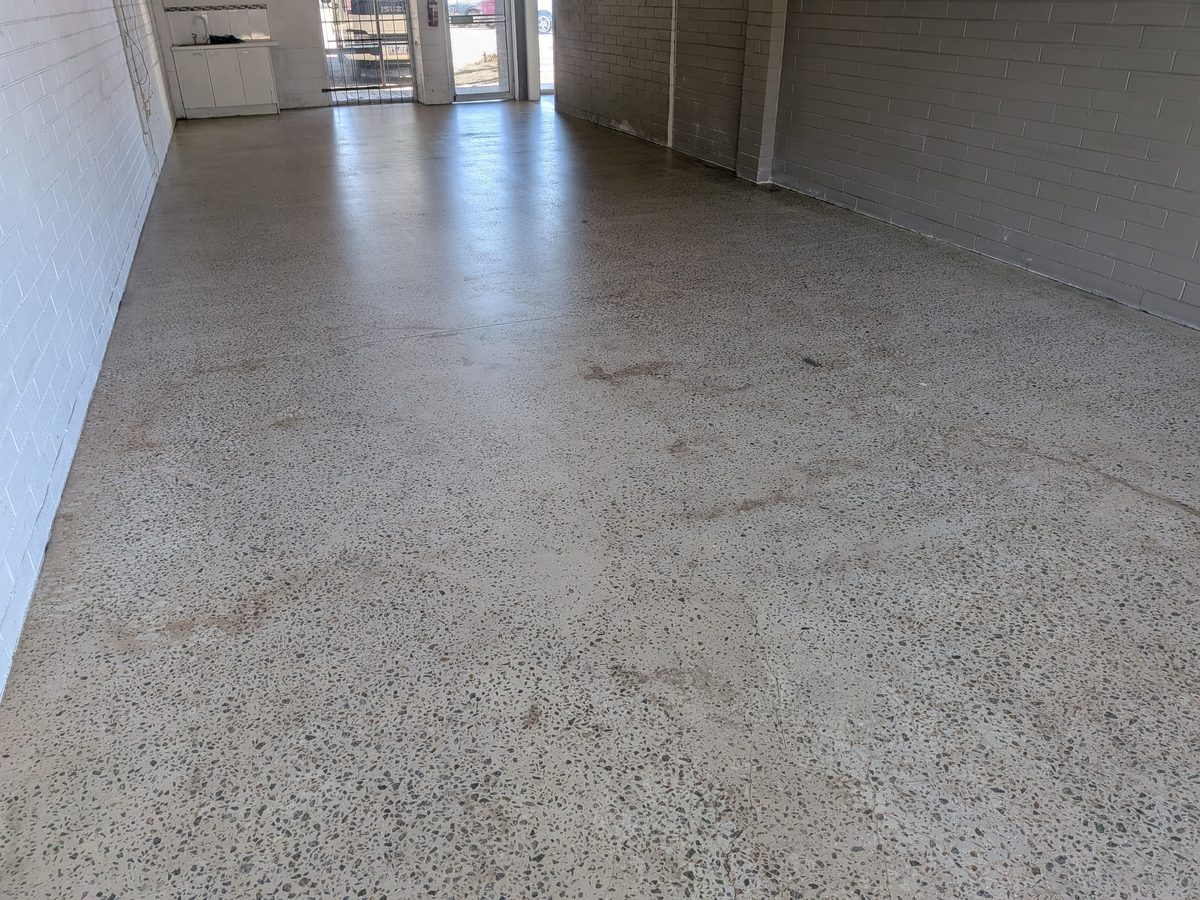

Two of the most popular ways to finish a concrete floor are mechanically polished concrete and grind and seal. They can look similar in a photo, and both start by grinding the slab — but they are different systems that get their final appearance and protection in different ways. Neither is universally better. The right choice depends on your slab, the environment, the look you want, how you’ll maintain it and your budget. This guide explains how each works and how to weigh them up, whether you’re a homeowner, builder, architect or commercial property owner on the Mornington Peninsula.
A note on the words "polished concrete"
"Polished concrete" gets used loosely in the industry. It’s sometimes applied to almost any shiny concrete floor, including grind-and-seal or coated floors. In this article, "polished concrete" means mechanically polished concrete (MPC) specifically — a floor refined by grinding and polishing the concrete itself. Keeping that distinction clear is the whole point of the comparison.
How mechanically polished concrete works
MPC changes and refines the slab itself. The floor is progressively ground with diamond abrasives, from coarser grits through to finer ones, so the surface becomes smoother and more reflective at each stage. Along the way the concrete is treated with a densifier (a chemical hardener that reacts within the surface to make it denser and more wear-resistant), and polishing continues to the chosen level of sheen. The appearance comes from the concrete and its aggregate, not from a coating sitting on top.
It’s worth clearing up a common myth: MPC is not always completely "coating-free." Many specifications include a stain protector or guard to improve resistance to spills. Depending on the specification, these may be penetrating, surface-applied or micro-film-forming — so it’s inaccurate to say every polished floor has nothing applied to it. What defines MPC is that its appearance and primary wear surface come from mechanically refined concrete rather than a conventional thick topical coating.
How grind and seal works
Grind and seal also starts by grinding the slab to the desired level of aggregate exposure and smoothness — but its final appearance and protection come from a topical, film-forming sealer or coating applied over the surface. That film is what you see and what protects the concrete. The coating can be chosen in different sheens (from matte to high gloss) and different chemistries, which is where a lot of the performance differences come from.
Because grind and seal depends on the coating, its performance varies significantly with the coating chemistry, the surface preparation, how many coats and how much film is built, the environment it’s in, the quality of application and how it’s maintained. Two grind-and-seal floors using different products, or applied to different standards, can behave very differently. That variability is a feature to manage, not a flaw — it’s also what makes the system flexible.
Comparing the two systems
The table below summarises the general differences. Treat it as a guide, not a guarantee — real results depend on the specific slab, products and workmanship.
| Consideration | Mechanically polished concrete (MPC) | Grind and seal |
|---|---|---|
| Where the finish comes from | The densified, polished concrete itself | A topical film-forming sealer/coating |
| Appearance | Natural stone-like depth from the concrete and aggregate | Depends on the coating; can look similar, or wetter/glossier |
| Gloss levels | Lower sheen through to high sheen, set by polishing grit | Matte to high gloss, set by the coating chosen |
| Aggregate exposure | Full, random, minimal or nil, ground into the slab | Also set by grinding before sealing |
| Stain & chemical resistance | Reduced porosity from densifying and optional guards; not stain-proof | Depends heavily on the coating; some chemistries resist chemicals/stains well |
| Scratching & wear | Hard, wear-resistant surface; can still scratch and show wear | The coating wears; some are very tough, others mark more easily |
| UV stability / yellowing | Exposed concrete doesn’t polymer-yellow like some coatings, but can still vary with weathering, staining, moisture and any guard used | Depends on the coating chemistry — some yellow in sunlight, others resist it |
| Maintenance | Routine cleaning; periodic re-protection and occasional re-polishing | Routine cleaning; the coating film is the wear layer |
| Repairability | Repairs blend into the slab but may remain visible | Localised recoating possible but can show edges/overlap |
| Recoating | No thick film to recoat; guards can be reapplied | Typically requires renewal or recoating as the wear layer ages |
| Installation time | Multi-stage grinding/polishing; can take longer | Grinding plus coating and cure/return-to-service time |
| Slab suitability | Suits sound slabs with workable aggregate | A clear coating can reveal or enhance colour variation, ghosting, repairs and aggregate differences; a suitably specified pigmented coating may conceal more |
| Moisture sensitivity | Assess moisture for either system; it can affect appearance, efflorescence and applied stain protection | Assess moisture; topical coatings may also blister, delaminate or fail if slab conditions exceed the product spec |
Stain and wear resistance — the honest version
Neither floor is stain-proof, scratch-proof or maintenance-free, and neither is guaranteed to stay slip-resistant in every condition. MPC gains stain resistance from densifying and any guard applied, but spills can still mark it, especially acidic ones. Grind and seal can offer strong stain and chemical resistance, but only as good as the coating chosen and how well it’s applied and maintained. Both can become slippery when wet or dusty, and slip resistance depends on the sheen, texture and any additives — it isn’t a fixed property of either system.
Maintenance and lifecycle
The biggest practical difference is how each ages. A grind-and-seal coating is a wear layer: it takes the daily abrasion and, over time and use, topical grind-and-seal systems typically require renewal or recoating as their wear layer ages. How soon depends on traffic, environment, the product and maintenance — which is why inventing a service-life figure would be misleading. MPC has no film to wear through in the same way, but it isn’t set-and-forget either: it needs regular cleaning, its stain protection may need periodic reapplication, and high-traffic floors can benefit from occasional re-polishing to restore sheen. Think of it as different maintenance rhythms rather than "low" versus "high."
Repairs, cracks and patching
Be realistic here for either system. Concrete cracks and moves, and repairs, patches and control joints can remain visible whichever finish you choose. With MPC, a repair may be processed as part of the surrounding floor, but differences in colour, aggregate and texture often remain visible. With grind and seal, localised recoating is possible, but the repaired area can reveal edges, overlap marks or a slight sheen difference. Neither system makes repairs invisible, and this is worth discussing before work starts (see our guide on ghosting in concrete floors for why existing slabs can be unpredictable).
Choosing between them
Rather than asking which is "better," work through the slab and the setting:
Slab and substrate condition. Is the existing concrete sound, and what’s the aggregate like? MPC relies on the slab’s own appearance, so aggregate type and how much you want exposed matter a lot. Note that a clear grind-and-seal coating won’t hide an inconsistent slab — it can reveal or enhance colour variation, ghosting, repairs and aggregate differences, much as polishing does — whereas a suitably specified pigmented coating may conceal more of it.
Moisture. Moisture conditions should be assessed for either system before choosing. Moisture can affect appearance, cause efflorescence and interfere with applied stain protection, and some topical coatings may additionally blister, delaminate or otherwise fail if the slab conditions exceed the product specification.
Previous contamination and coverings. Old adhesives, oils and coverings influence both the look and which system will sit down well — another reason an on-site assessment matters.
Aggregate exposure and appearance. Decide the look first: a natural, stone-like polished slab, or a particular sheen and colour depth from a coating.
Intended use and environment. Indoor living areas, a busy café, a warehouse, an outdoor or UV-exposed area, exposure to particular chemicals — each points toward different priorities, and for coatings, toward a particular chemistry with the right UV behaviour.
Maintenance expectations and budget. Consider who will maintain the floor and how, and weigh the whole-of-life pattern, not just the install.
What about cost?
We won’t quote prices here, because cost depends on real variables: the slab’s size, condition and preparation needs; how much grinding and crack repair is required; the level of aggregate exposure and sheen; the coating chemistry and film build for grind and seal; site access and power; and the finish quality specified. A straightforward slab and a demanding, high-spec floor sit at very different points. The honest way to compare cost is on your actual floor, factoring in both installation and the likely maintenance or recoating pattern over time.
The bottom line
Both mechanically polished concrete and grind and seal have their place. MPC refines the concrete itself into a hard, natural-looking floor; grind and seal builds its look and protection from a topical coating that can be tuned to the setting. The right choice comes down to the slab, the environment, the appearance you want, your maintenance expectations and your budget — best decided after someone has actually looked at your floor.
Frequently asked questions
Is polished concrete the same as grind and seal?
No. Mechanically polished concrete gets its finish from the densified, polished slab itself; grind and seal gets its finish and protection from a topical coating applied over the concrete. "Polished concrete" is sometimes used loosely for both, which causes confusion.
Which one is more durable?
It depends. MPC is a hard, wear-resistant surface with no thick film to wear through; grind-and-seal durability depends on the selected coating system, preparation, application, traffic and maintenance — and some coatings are very tough. Neither is automatically superior.
Does grind and seal need recoating?
Typically, yes — the coating is a wear layer, so topical grind-and-seal systems usually require renewal or recoating as that layer ages, at intervals that depend on traffic, environment, the product and maintenance. MPC has no thick film to recoat but still needs cleaning, periodic stain protection and sometimes re-polishing.
Will either floor hide cracks or repairs?
Not completely. Cracks, patches and repairs can remain visible in both systems. It’s best to set expectations before work begins.
Which should I choose for a home versus a commercial space?
Both suit either setting; the deciding factors are the slab, the environment (including UV and chemical exposure), the look you want and how the floor will be maintained — not the label. An on-site assessment is the reliable way to decide.
Not sure which system suits your slab? Send us details and photos of your floor for an initial assessment. Where required, we can inspect the concrete, talk through the appearance and maintenance you’re after, and recommend whether mechanically polished concrete or grind and seal is the better fit. Get a free quote.
Related pages
Thinking about a concrete floor?
Tell us about your space and we will come back to you with a free, no-obligation quote.