

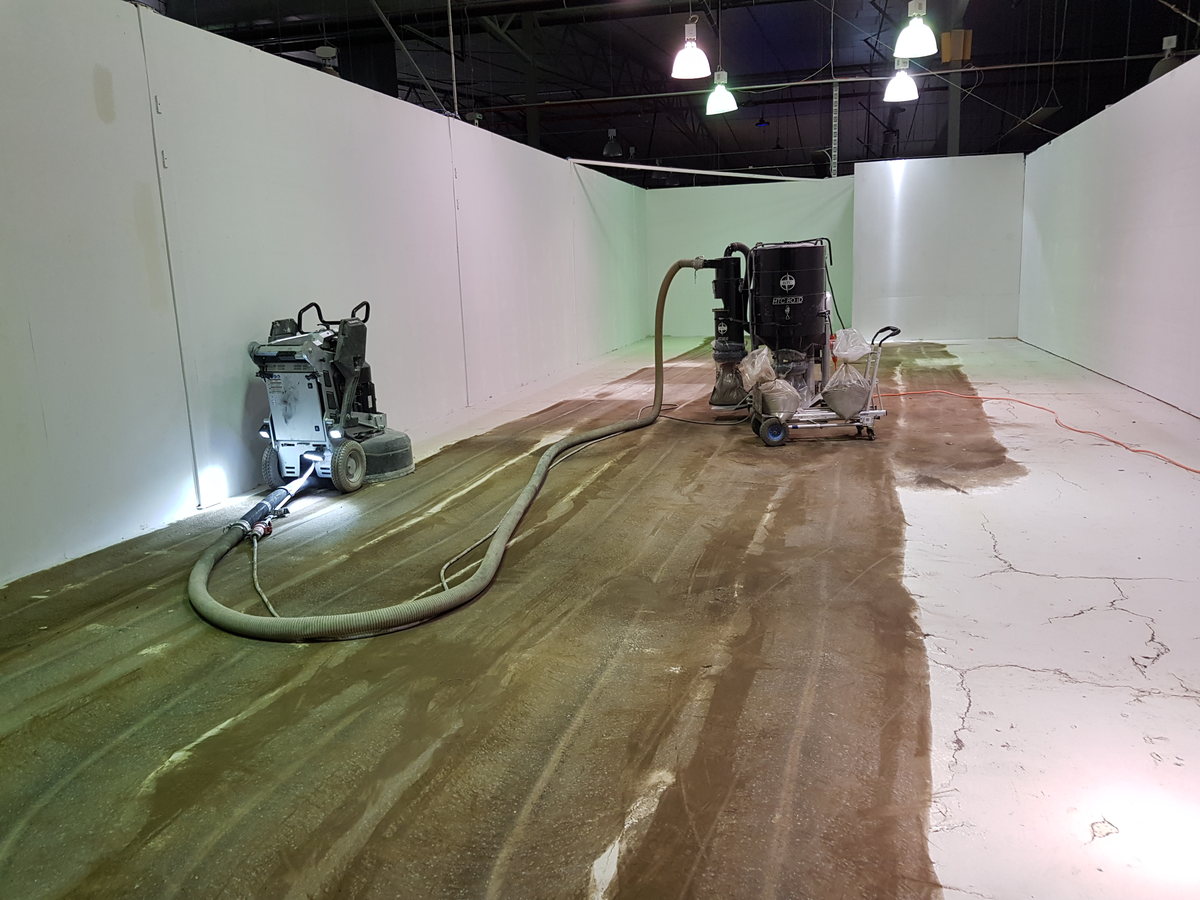

The short answer is that many existing concrete slabs can be polished — but whether yours is suitable, and how it will actually look, can’t be confirmed without assessing the concrete itself. Polishing works with the slab you already have, so its age, condition, history and the aggregate inside it all shape the result. This guide explains what makes an existing slab more or less suitable, the difference between "technically possible" and "will look the way you’re picturing," and when a different finish might give you a more dependable outcome. It’s written for homeowners first, but it’s just as useful for builders and designers assessing a floor on the Mornington Peninsula.
First, what "polishing an existing slab" involves
Mechanically polishing an existing slab means grinding back the surface and refining it through progressively finer diamond abrasives, usually with a densifier to harden the surface, until it reaches the chosen level of sheen and aggregate exposure. Because you’re cutting into concrete that already exists — rather than pouring new — the process reveals whatever is in and on that slab. That’s the key idea to hold onto throughout: polishing exposes the slab’s history rather than covering it.
What affects whether a slab can be polished
Slab condition and soundness. The concrete needs to be sufficiently sound at the surface and suitable for the proposed flooring system — not drummy, crumbling, delaminating or badly deteriorated. Note that a flooring assessment is not a structural engineering assessment: where movement, major cracking, subsidence or structural deterioration is suspected, further specialist advice may be required. A stable surface in good condition is the starting point; a weak or failing one may not take a polish well, or at all.
Previous floor coverings. Tiles, carpet, vinyl, timber and their fixings all leave the slab in different states once removed. Removal is often the first job, and what’s underneath isn’t fully known until the covering is up.
Adhesive and coating residue. Old tile glue, carpet adhesive, bituminous ("cutback") residue, paint or existing coatings usually have to be removed before polishing. Some residues come off cleanly; others have penetrated or stained the surface and influence the finished look.
Contamination and staining. Oil, grease, rust, paint and chemical spills can migrate into concrete. These can affect both how the surface polishes and how even the colour looks afterwards.
Ghosting. Existing slabs often show ghosting — persistent shadows, patches or outlines left by old walls, coverings, adhesives, contamination or the way the slab was built and cured. Polishing tends to reveal ghosting rather than hide it, and much of it is difficult to remove consistently. (Our companion guide on ghosting explains this in detail.)
Cracks, joints, repairs and patches. Concrete cracks and moves, and slabs often contain control joints, previous repairs and patches. These can be filled and worked into a polished floor, but repairs, patches and joints frequently remain visible, because they rarely match the surrounding concrete exactly.
Flatness and level changes. Polishing follows the existing profile of the floor. Dips, falls, high spots and level changes between areas don’t disappear through polishing; significant flatness issues may call for grinding, levelling or a different approach first.
Aggregate type and distribution. With mechanical polishing the look comes from the concrete and its stone. The type of aggregate, how deep it sits and how evenly it’s distributed all affect what exposure levels are achievable and how consistent the result will be — and this varies from slab to slab, and even across one floor.
Previous grinding or surface damage. A slab that has already been ground, gouged or damaged, or had toppings removed, may have an uneven surface or exposure that limits the finishes available.
Moisture considerations. Moisture moving through a slab can affect appearance, cause efflorescence and interfere with any applied stain protection. Moisture conditions should be assessed, particularly for slabs on ground without an effective moisture barrier.
Access, edges, thresholds and fixtures. Practical site factors matter too: machine access to the space, how close the polishing can get to walls and corners, thresholds and level transitions, and fixed cabinetry, islands or fixtures that the floor has to meet. These affect both feasibility and how the finished edges will look.
A safety note on older floor coverings
In older properties, some vinyl tiles, sheet flooring, underlays and bituminous adhesives may contain asbestos. These materials cannot be identified reliably by appearance alone, so before any grinding or removal, suspect materials should be assessed or tested by a suitably qualified person. See the Victorian Government’s asbestos information at asbestos.vic.gov.au. This is a safety point first; it also affects how an old covering is removed before a slab is prepared.
Technical suitability vs aesthetic suitability
This distinction matters more than any single factor. A slab can be technically suitable — sound, grindable, able to take a densified polished surface — while not being aesthetically suitable for a specific look you have in mind. In other words, "yes, this slab can be polished" and "yes, this slab will give you an even, consistent, particular finish" are two different questions. A floor might polish up perfectly well but show ghosting, colour variation, patch marks or uneven aggregate that don’t match a picture from a showroom or a website. Being clear about which kind of suitability you’re asking about — and being realistic about the second — avoids disappointment.
What a test area can and can’t tell you
We rarely provide test areas, and one may be considered only in limited circumstances. Where a small area is ground, it shows how that part of your slab responds to grinding, densifying and the proposed finishing or stain-protection treatment right now, and gives an indication of the likely character. But because concrete varies across a floor, a good test result doesn’t guarantee the same outcome everywhere, and a test patch can’t reveal how deep a stain runs or how the rest of the slab will behave. Treat it as helpful evidence, not a guarantee of the finished floor.
Which finish suits your slab?
Assessment usually points toward one of a few paths:
When mechanically polished concrete may be suitable. A sound slab with workable aggregate, manageable flatness and a history you’re comfortable showing off can be a good candidate for a mechanically polished finish, where the concrete’s own appearance is the feature.
When grind and seal may be more practical. Where you want a particular sheen or colour depth, or the slab suits a topical finish, grind and seal can be a practical option. Keep in mind that a clear grind-and-seal coating won’t conceal ghosting, repairs or colour variation — like polishing, a clear film tends to reveal them.
When an overlay or pigmented coating may give more visual control. If the slab shows significant ghosting, staining or variation and you want a more uniform look, a cementitious overlay or a suitably specified pigmented coating can provide much more visual control, because it doesn’t rely on seeing the existing concrete. These options still need proper preparation and assessment of cracks, movement, moisture and compatibility, and none can be assumed to give complete concealment or durability in every situation. An overlay also adds thickness, so its effect on thresholds, doors, fixtures and level transitions needs to be considered during selection.
The right path depends on the slab and how the space will be used — which is exactly why an assessment comes first.
Why no one should promise a perfect result before assessing your slab
Because polishing works with an existing slab and reveals its history, a perfectly uniform result cannot be reliably promised before the slab has been assessed. A careful assessment — checking soundness, coverings and residues, contamination, cracks and joints, flatness, aggregate, moisture and access — is what turns "it should be fine" into a realistic picture of what your floor can deliver, and which finish will get you closest to what you want.
Suitability at a glance
A quick reference to what’s typically assessed. General guidance only — your slab needs an actual inspection.
| Factor | More favourable for polishing | Needs closer assessment |
|---|---|---|
| Slab soundness | Sound, stable surface with no obvious deterioration | Drummy, cracking badly, delaminating, crumbling |
| Floor coverings | Already removed or easy to remove | Bonded tiles, heavy adhesives, unknown layers |
| Residue/contamination | Minimal, surface-level | Penetrated adhesive, oil, rust, paint, staining |
| Ghosting | Minor or acceptable as character | Prominent shadows/outlines where uniformity is wanted |
| Cracks/joints/repairs | Few, stable | Numerous, active, or many visible patches |
| Flatness/levels | Reasonably flat | Significant dips, falls or level changes |
| Aggregate | Suitable type, evenly distributed | Little/uneven aggregate for the look wanted |
| Moisture | Moisture conditions suitable for the proposed system | Elevated moisture, visible efflorescence, unknown slab conditions or readings outside the proposed system’s requirements |
| Access/edges | Good machine access | Tight spaces, many fixtures, awkward edges |
The bottom line
Many existing slabs can be polished, but some require extensive preparation or are better suited to another finish — and "can it be polished?" and "will it look exactly how I imagine?" are different questions, so only an assessment of your actual concrete can answer the second. Get the slab looked at (and ideally test a patch), be clear about the look you’re after, and choose between mechanically polished concrete, grind and seal, or an overlay/pigmented finish based on what your slab can realistically deliver.
Frequently asked questions
Can old concrete floors be polished?
Often, yes — age alone isn’t the deciding factor. What matters is whether the slab is sound, what’s on and in it (coverings, adhesives, contamination), its cracks and flatness, and the aggregate. An on-site assessment is the reliable way to know.
Do I need to remove tiles or carpet before polishing?
Usually, yes. Existing coverings and their adhesives generally have to be removed first, and what’s revealed underneath — residues, staining, ghosting — isn’t fully known until they’re up. In older buildings, some coverings and adhesives may contain asbestos and should be assessed before removal.
Will polishing hide stains, cracks or old marks?
Not reliably. Polishing reveals the slab’s history rather than concealing it, so ghosting, stains, cracks, joints and repairs can remain visible. If an even look is the priority, an overlay or a pigmented coating usually gives more control.
Can you tell me for certain how my floor will look before starting?
No one honestly can. A proper assessment gives a strong, realistic indication, but because concrete varies across a slab, a perfectly uniform result can’t be guaranteed in advance. Even where a test area is possible, a small area cannot reliably predict the appearance of the complete finished floor.
What if my slab isn’t ideal for polishing?
There are good alternatives — grind and seal, or a cementitious overlay or pigmented coating — that may suit the slab and the look you want. The right choice comes out of assessing the concrete.
Wondering whether your slab can be polished? Send us details and photos of your floor for an initial assessment. Where required, we can inspect the concrete and talk through the most realistic finish for your slab — whether that’s mechanically polished concrete, grind and seal, or an overlay. Get in touch for a quote.
Related pages
Thinking about a concrete floor?
Tell us about your space and we will come back to you with a free, no-obligation quote.