

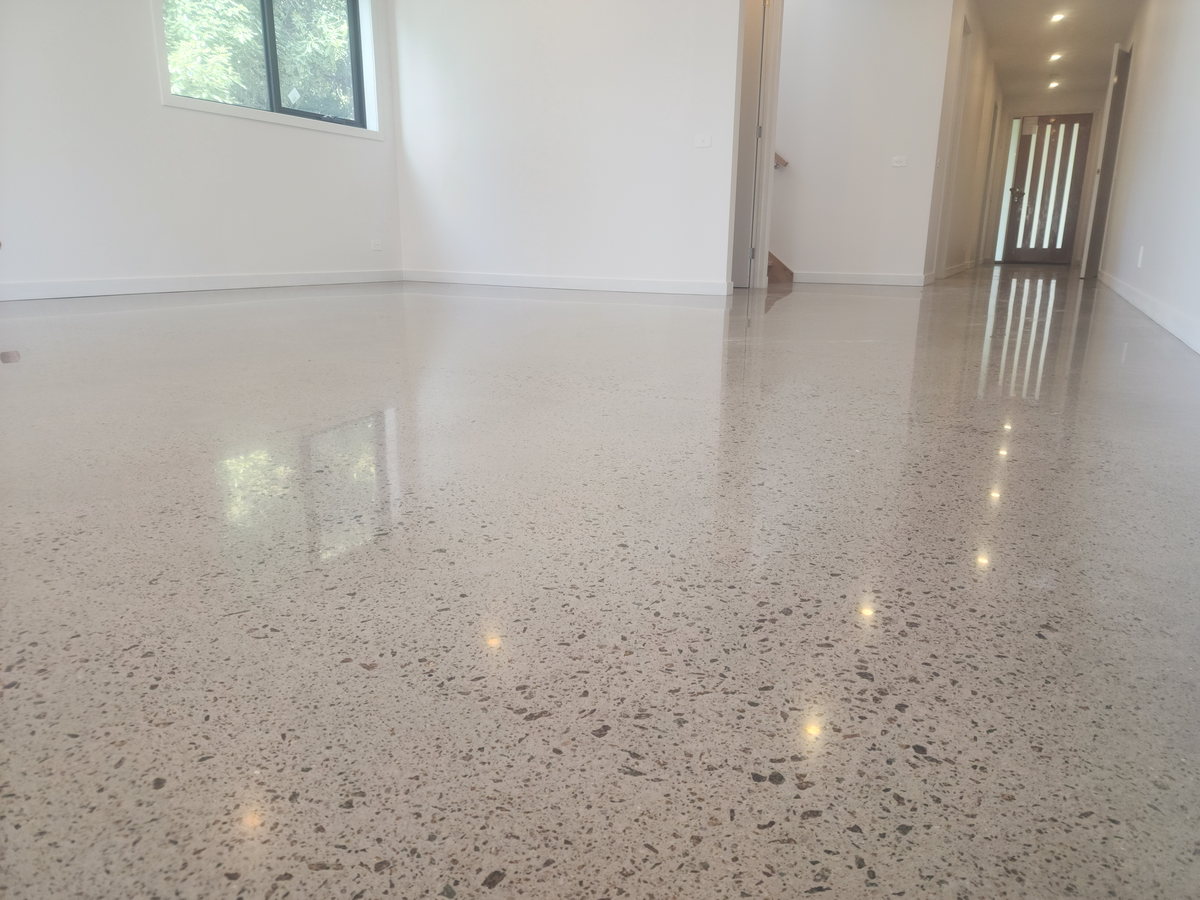

A concrete floor is hard-wearing, but no concrete floor is truly "maintenance-free." The good news is that keeping one looking and performing well is mostly about simple, consistent habits — and about matching those habits to the finish you actually have. The catch is that "concrete floor" covers several very different finishes, and the right care for one can dull or damage another. This guide walks through sensible routine care and then the differences by finish, for homeowners first but just as useful for builders and commercial owners across the Mornington Peninsula. Wherever possible, treat it as general guidance and defer to the specifics of your floor.
First, know your finish — and get the care instructions
The single most useful thing you can do is confirm what finish you actually have and what product was used, because the correct maintenance method depends on the finish and the product specification. The main families are:
Ask your installer (or the manufacturer of the sealer/coating) for their written care instructions, and keep them. If a specific cleaner or method is nominated for your system, that advice takes precedence over any general guide, including this one.
- Mechanically polished concrete (MPC) — the densified, polished slab itself is the surface.
- Grind and seal / topical coatings — a film-forming coating over the concrete does the protecting.
- Penetrating-sealer finishes — a sealer absorbed into the slab, with no conventional topical film.
- Epoxy and other resin systems — a built-up resin coating bonded to the slab.
The routine that keeps most floors well
Some habits are low-risk and worthwhile across finishes:
These four habits carry most of the load. The detail that matters — the cleaner and the finish-specific care — is below.
- Keep grit and dust off it. Fine grit can act as an abrasive underfoot and contribute to scratching and wear. Sweep, dust-mop or vacuum (soft head) regularly, especially near entries.
- Mop appropriately. For routine cleaning, a damp (not sopping) mop with a compatible, pH-appropriate, residue-free cleaner suits most finishes. Wring well, and don’t leave water pooling.
- Deal with spills promptly. Wipe up spills — especially anything acidic, oily or coloured — sooner rather than later, so they don’t have time to mark or penetrate.
- Inspect periodically. Have a look over the floor now and then for early signs of wear, dulling, scratching or damage, so small issues are caught before they grow.
Choosing a cleaner: compatible, pH-appropriate, residue-free
There is no single cleaner that’s right for every concrete floor, so avoid one-size-fits-all product claims. The safe approach is a cleaner that is pH-appropriate for your finish, residue-free, and compatible with the installed system — ideally the one your installer or the product manufacturer nominates.
It’s worth understanding what can go wrong, because several common household choices can damage or dull some finishes:
Because different finishes react differently, a product that’s fine on one floor can harm another — which is exactly why "compatible with your system" matters more than any brand. Dilute, use, rinse or leave the cleaner as directed by the installed system’s care instructions, and avoid leaving excess water on the floor. Too much detergent or residue can leave a film that dulls the look and can affect slip performance underfoot.
- Acidic cleaners (and homemade vinegar or lemon solutions) can etch or dull polished and cementitious surfaces and attack some sealers.
- Strongly alkaline cleaners can strip or degrade certain coatings and sealers.
- Abrasive powders and harsh scouring pads can scratch and cut the sheen.
- Unapproved solvents can soften or lift some coatings.
Care by finish type
Mechanically polished concrete (MPC). Routine cleaning as above keeps it looking its best. Beyond that, MPC doesn’t have a thick film to recoat — instead, its stain protection may need renewal over time, and some floors may benefit from periodic mechanical maintenance or re-polishing to restore sheen in high-traffic areas. How often depends on the specification, the traffic and the environment, so there’s no single schedule.
Grind and seal and other topical coatings. Here the coating is the wear layer, so the goal is to protect that film and watch it age. Clean gently, avoid anything that attacks the coating, and inspect for wear, dulling, scratching and thinning, particularly on traffic paths. When the wear layer ages, it can be renewed or recoated — but the right interval depends entirely on the product, traffic and care, so it’s assessed on the floor rather than assumed.
Penetrating-sealer finishes. With no conventional topical film, there’s nothing to peel or wear through in the same way, and the look stays close to natural. A penetrating treatment may need periodic reapplication to maintain its effect — but there’s no fixed, universal schedule; it depends on the product, the surface and the wear it sees. Routine cleaning is much the same: keep grit off, mop with a compatible cleaner, and rinse.
Epoxy and other resin systems. Keep them free of grit, clean with a compatible cleaner, and deal with spills promptly. Importantly, inspect the coating for wear, scratching, loss of sheen, local damage, or any loss of adhesion (lifting, bubbling or edges). How a worn or damaged resin floor is best addressed depends on the specific system, so it’s handled per the product rather than to a generic timetable.
Protect the floor from avoidable damage
A lot of wear is preventable:
- Don’t drag furniture or appliances. Dragging — especially with unprotected metal legs — or dragging over trapped grit can scratch or gouge any of these finishes. Lift rather than slide, and fit suitable, clean, soft protective pads under legs and feet (keep them clean, as grit caught under a pad becomes a grinding point). We won’t name a specific product — just choose pads suited to your floor and check them from time to time.
- Mind chairs, trolleys and castors in busy areas; hard or gritty castors can mark a floor over time.
A note on mats and rugs
Mats are useful at entries to catch grit — but treat them with a little care. The mat backing should be compatible with your finish, and the mat should be kept clean and dry. Trapped moisture under a mat, grit held against the surface, or incompatible rubber or plasticisers in some backings can mark, discolour or otherwise affect some coatings and sealers. Lift and clean under mats periodically, and if you’re unsure whether a backing is compatible, check before leaving it in place long-term.
Stains and damage: assess, don’t attack
If a stain or mark appears, resist the urge to reach for the strongest chemical in the cupboard. How a stain or damage is best treated depends on the installed system — what’s safe on one finish can dull or etch another. Identify the finish, check the care instructions, start with the gentlest compatible method, and where you’re unsure, ask the installer rather than experimenting with random cleaners that could make it worse.
A practical maintenance rhythm
Frequencies depend on traffic, setting and finish, so treat the columns as types of task, not fixed intervals.
| When | Task | Notes |
|---|---|---|
| Daily / as needed | Sweep, dust-mop or soft-vacuum grit; wipe up spills promptly | Grit and spills do the most avoidable harm |
| Routine | Damp-mop with a compatible, pH-appropriate, residue-free cleaner; rinse if needed | Wring well; avoid pooling water and detergent film |
| Routine | Check and clean under entry mats; keep protective pads clean | Trapped grit/moisture can mark some finishes |
| Periodic | Inspect for wear, dulling, scratching, coating damage or loss of adhesion | Catch small issues early |
| Periodic (finish-specific) | MPC: renew stain protection / mechanical maintenance where needed · Coatings: renew/recoat the wear layer when it ages · Penetrating sealer: reapply as needed · Epoxy: address wear/damage per the system | No universal interval — assess the actual floor |
Why maintenance matters
Good maintenance isn’t just cosmetic. Keeping grit off protects the surface from scratching and wear; cleaning with a compatible product and rinsing keeps the appearance true and avoids a residue film that can dull the floor and affect slip resistance; and timely inspection and finish-appropriate renewal keep the floor performing as it was intended. None of these floors is "maintenance-free" — but with the right, finish-matched routine, they’re straightforward to keep looking good and behaving well for a long time.
Frequently asked questions
How do I clean a polished concrete floor day to day?
Keep grit off it (sweep, dust-mop or soft-vacuum) and damp-mop with a compatible, pH-appropriate, residue-free cleaner, wrung out well. Wipe up spills promptly and rinse away detergent residue. Confirm the exact method with your installer, since finishes differ.
Can I use vinegar or a general spray-and-wipe on my concrete floor?
Best avoided unless it’s confirmed compatible. Acidic solutions like vinegar can etch or dull polished and sealed surfaces, and some general cleaners are too acidic, too alkaline or leave residue. Use a cleaner suited to your specific finish instead.
Is sealed or epoxy concrete maintenance-free?
No — no concrete floor is maintenance-free. Sealed and coated floors have a wear layer to look after and eventually renew, penetrating sealers may need reapplication, and MPC needs cleaning and occasional attention. The work is modest, but it’s not nothing.
How often does a sealed or epoxy floor need recoating?
It depends on the product, traffic, environment and care, so a fixed figure would be misleading. Inspect the floor for wear, dulling or damage and renew or recoat the wear layer when it needs it, guided by the installer and the product’s information.
Will the wrong cleaner affect how slippery the floor is?
It can. Detergent film from over-use or incorrect application can dull the surface and affect slip performance. Follow the installed system’s directions for dilution, use and rinsing. Slip resistance also depends on the finish and conditions — see our slip-resistance guide.
Not sure how your floor should be maintained? Check the installer’s or manufacturer’s care instructions, or contact us with details of the finish so we can advise whether maintenance, re-protection or recoating may be required.
Related pages
Thinking about a concrete floor?
Tell us about your space and we will come back to you with a free, no-obligation quote.