

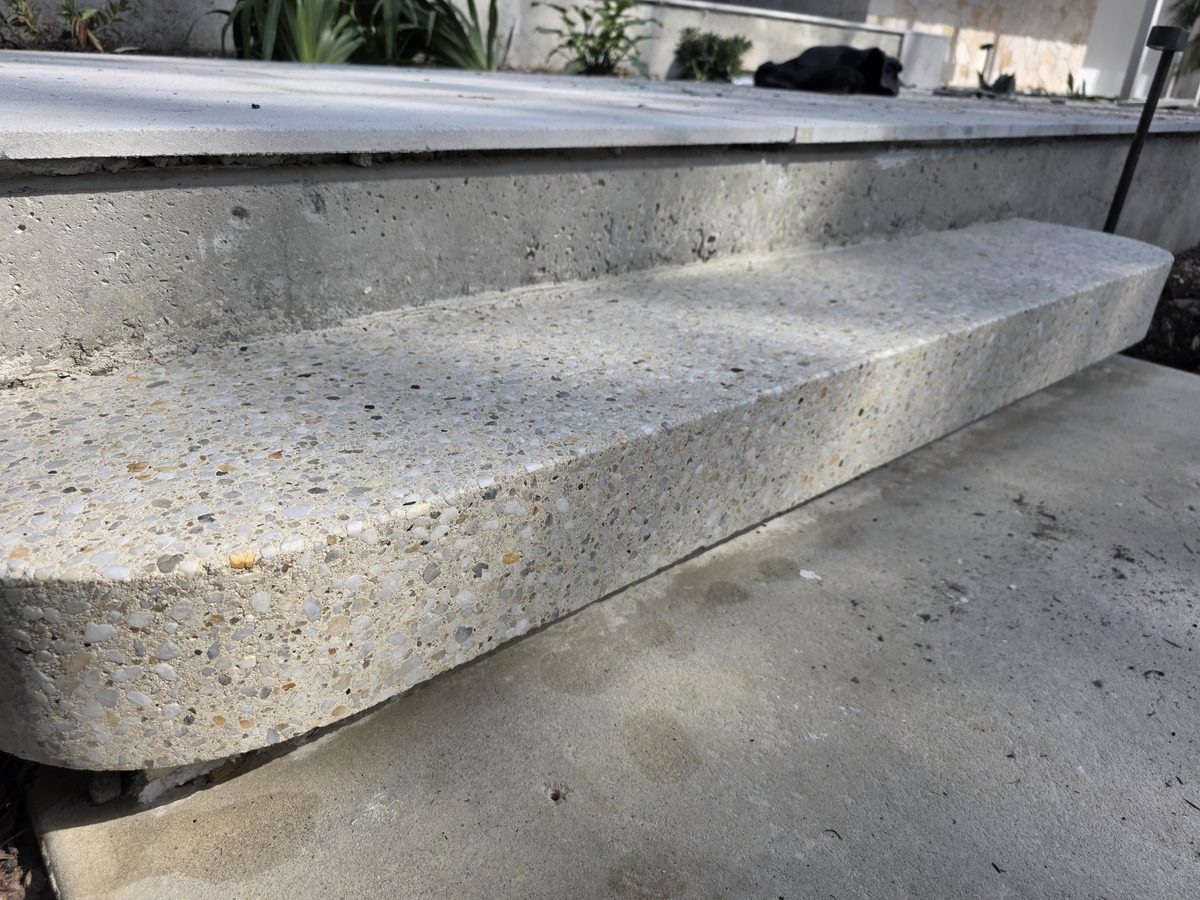

It’s a common question people ask about a concrete floor, and it deserves an honest answer rather than a marketing one. Polished concrete should not automatically be described as either "slippery" or "non-slip." How a floor performs underfoot depends on the finish itself, the environment it’s in, what ends up on the surface, how it’s maintained and what it’s used for. The same style of floor can feel secure in a dry living room and much less so at a wet entry — so the useful question isn’t "is it slippery?" but "how will this finish behave in this setting?" This guide, written for homeowners first but useful to builders, designers and commercial owners across the Mornington Peninsula, walks through what actually affects slip resistance.
Why it isn’t a simple yes or no
Slip resistance is a property of a surface in a situation, not a fixed label a floor carries everywhere. A finish that grips well when clean and dry can become far more slippery with water, oil or fine dust on it. That’s why no responsible answer treats any floor as inherently non-slip, slip-proof or "safe when wet." The honest framing is that a given finish has a certain level of slip resistance for certain conditions — and that level should be considered against how the area will really be used.
The finish makes a difference — and gloss alone doesn’t tell you
"Polished concrete" covers several finishes that can behave differently:
Because these are genuinely different surfaces, they can’t be lumped together. And crucially, visual gloss does not establish slip resistance. A shiny-looking floor is not automatically slippery, and a matte one is not automatically grippy — appearance and measured slip performance are separate things. Nor is it safe to assume that taking a floor to a higher polish automatically makes it more slippery, or that more mechanical polishing automatically improves grip; the relationship isn’t that simple, which is exactly why slip performance is assessed rather than guessed from a photo.
- Mechanically polished concrete (MPC) is refined by grinding and polishing the slab itself. The degree of refinement and any surface treatment influence how it feels underfoot.
- Grind and seal and other coated floors take their surface from a topical coating, so the coating’s texture and any additives — not the concrete — largely govern grip.
- Honed finishes are a distinct, more matte finish rather than simply a polish "stopped early"; their feel and grip vary, and — like any finish — their actual slip performance depends on specification and testing rather than on the label.
- Pavilion-style / acid-etched finishes are a different surface again, often with visible surface texture. Texture alone doesn’t guarantee suitable slip resistance, though: performance still depends on the specification and, where it matters, testing.
Dry versus wet — consider them separately
The biggest single variable is whether the surface is dry or wet.
Dry conditions. A clean, dry polished or sealed concrete floor in an internal living area is a relatively controlled situation, and many such floors perform comfortably underfoot day to day.
Wet conditions. Introduce water — a spill, tracked-in rain, mopping, a bathroom or an outdoor area — and the picture changes. Water can reduce available grip, but the extent depends on the particular surface, footwear and conditions and should not be predicted from smoothness or appearance alone. Wet and dry performance are effectively two different questions, which is why slip testing itself uses distinct wet and dry methods. If an area is likely to get wet, its wet behaviour is the one that matters.
Contamination changes everything
It isn’t only water. Anything between the sole and the floor affects grip:
This is why housekeeping is part of the slip-resistance story, not separate from it.
- Water reduces grip and is the most common culprit at entries, bathrooms and outdoors.
- Oils and greases — think a garage, workshop or kitchen — can make a surface markedly more slippery.
- Dust and fine sand are loose particles that can reduce traction between footwear and the floor, and are easily walked in from outside.
- Cleaning residue — film left by the wrong product, or detergent not properly rinsed — can leave a floor more slippery than the finish itself would be.
What can change a floor’s slip performance
Several things can be specified or added to influence grip:
There’s a trade-off to go in with eyes open: adding texture or additives can change the appearance and feel of the floor, can make it harder to clean (more texture can hold dirt), and can wear over time with traffic and cleaning — so grip built into the surface may need monitoring and, eventually, attention. None of this makes textured finishes wrong; it just means the choice balances grip, look and cleanability rather than delivering one for free.
- Surface texture and refinement level — texture is often intended to help grip, but the actual effect depends on the specific surface, its use and condition, and can’t be assumed from look or feel alone.
- Topical coatings — the coating chosen (its texture and formulation) largely sets a coated floor’s grip.
- Grip additives (sometimes called anti-slip additives) — fine additives can be mixed into or broadcast onto a coating or sealer with the aim of raising slip resistance; how much they actually help depends on their specification, application, wear, contamination and cleaning.
- Broadcast media — aggregate or grit cast into a system is used to create a deliberately textured surface intended to improve grip, subject to those same variables and, where it matters, verification by testing.
Factors that affect slip resistance at a glance
General tendencies only — real performance depends on the specific floor, its use and how it’s maintained, and should be assessed rather than assumed.
| Factor | Why it matters | What to keep in mind |
|---|---|---|
| Wet vs dry | Water can reduce available grip | The extent varies with the surface, footwear and conditions; don’t predict it from appearance |
| Contamination (water, oils, dust, sand, cleaning residue) | Anything between shoe and floor can reduce grip | Housekeeping is part of slip performance, not separate from it |
| Finish type (MPC, grind & seal, coated, honed, pavilion) | Different surfaces behave differently | Don’t lump them together; gloss alone tells you little |
| Surface texture & refinement | Texture is often intended to aid grip | The actual effect can’t be assumed from look or feel; verify by testing where it matters |
| Grip additives / broadcast media | May be specified to raise slip resistance | Performance depends on specification, application, wear and cleaning; can change look, feel and cleanability |
| Environment & use (entries, bathrooms, kitchens, ramps, outdoors) | Water/contamination/gradient raise the requirement | A dry lounge and a wet entry need different targets |
| Cleaning & maintenance | Products, residue and grit affect ongoing grip | A good finish, poorly maintained, can become slippery |
Different areas need different consideration
A dry internal living area is a very different proposition from the places where slips actually tend to happen. Entrances, bathrooms and wet areas, laundries, commercial kitchens, ramps and slopes, pool surrounds and outdoor or covered-alfresco areas all involve water, contamination or gradient, and generally warrant more slip resistance than a lounge or bedroom. The right target for a busy café entry or a commercial kitchen is not the right target for a dry hallway — so the area’s real use should drive the finish, not a single house style applied everywhere.
Cleaning and maintenance affect ongoing performance
Slip resistance isn’t set once at installation. The way a floor is cleaned — the products used, whether residue is rinsed, how promptly spills are dealt with, and whether grit is kept off it — has an ongoing effect on how it performs. A well-chosen finish that’s poorly maintained can become more slippery than intended, while sensible cleaning helps a floor keep the performance it was specified for. Any grip additive or texture should also be checked periodically, since wear can reduce it over time.
How slip resistance is assessed in Australia
Where slip resistance matters, it can be measured rather than assumed. Australia has recognised test methods and guidance for pedestrian-surface slip resistance — but they aren’t a single rule that applies uniformly to every floor or project. Which of them applies, and what result is appropriate, depends on the building, the specific area, how it’s used, and the relevant regulatory or contractual requirements for that project. In broad terms:
These methods include both wet and dry approaches — such as the wet pendulum test, the oil-wet inclining-platform (ramp) test and dry floor friction testing — chosen to suit the surface and situation. Separately, the National Construction Code references AS 4586 for certain applications, including relevant stair and ramp surfaces; that specific requirement should not be assumed to apply to every internal floor — what applies to your project depends on its use and the regulations for it. Work to the applicable, current editions of these documents rather than assuming a particular edition stays current over time.
Which test applies, and what target is appropriate, are matters for a suitably competent testing professional or laboratory and the project’s requirements. This article is general information, not a compliance certification, and a single generic test result should not be assumed to suit every site. If a floor has to meet a particular requirement, that’s a job for proper specification and, where appropriate, testing for the intended use.
- AS 4586 is used for classifying new pedestrian surface materials (typically tested before or at installation).
- AS 4663 addresses existing pedestrian surfaces already installed and in use.
- HB 198 provides guidance on specifying and testing slip resistance; it is a guidance handbook and does not, in itself, create compliance requirements.
The bottom line
So — is polished concrete slippery? Not by definition, and not never: it depends on the finish, whether the surface is wet or dry, what’s on it, how it’s looked after and where it’s used. No concrete finish should be sold as inherently non-slip or safe when wet, and gloss alone tells you little. Decide how each area will really be used, choose (and if needed texture) the finish for those conditions, keep it clean, and — where slip resistance genuinely matters — have it specified and tested for the job rather than left to assumption.
Frequently asked questions
Is polished concrete slippery when wet?
It can be — most smooth floors offer less grip when wet, and polished or sealed concrete is no exception. Wet and dry performance are separate questions, so if an area gets wet, plan the finish (and any texture or additive) around its wet behaviour rather than its dry feel.
Does a shiny polished concrete floor mean it’s slippery?
Not necessarily. Visual gloss doesn’t establish slip resistance — a glossy floor isn’t automatically slippery and a matte one isn’t automatically grippy. Slip performance depends on texture, contamination, wear and cleaning, and is measured rather than judged by shine.
Can polished concrete be made non-slip?
Slip resistance can be increased — through surface texture, grip additives or broadcast media — but no finish should be called "non-slip," "slip-proof" or safe when wet. Adding grip can also change the look, feel and cleanability of the floor and can wear over time, so it’s a balance to specify deliberately.
Are polished concrete floors safe for bathrooms, entries or outdoors?
These are exactly the areas that need more thought, because water and contamination are common. They generally warrant higher slip resistance than a dry living area, and the finish should be chosen — and where appropriate tested — for those wet conditions.
How is slip resistance actually measured?
In Australia it’s assessed using recognised test methods in the Australian Standards (AS 4586 for new surface materials, AS 4663 for existing surfaces) with guidance in HB 198, using wet and dry methods such as the wet pendulum, oil-wet ramp and dry floor friction tests. Which of these applies depends on the area, its use and the regulations for the project, so it’s a matter for a suitably competent testing professional or laboratory — a single generic result doesn’t fit every site.
Wondering whether a particular finish will suit a wet or busy area in your home or business? Send us details and photos of the space and how it’s used, and where slip resistance matters we can talk through suitable finishes and textures — and, where appropriate, point you to proper slip-resistance testing for the intended use. Get in touch for a quote.
Related pages
Thinking about a concrete floor?
Tell us about your space and we will come back to you with a free, no-obligation quote.