

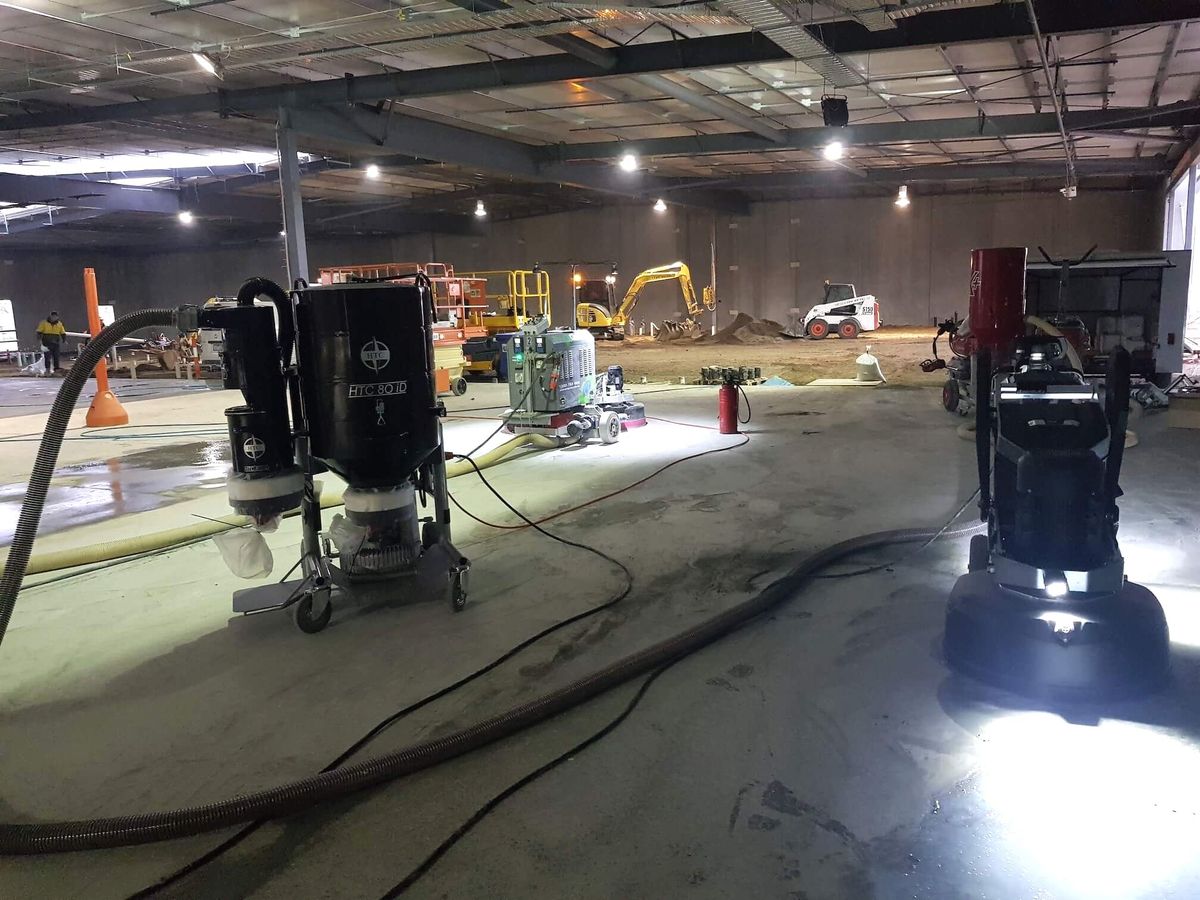

The honest answer to "what does polished concrete cost?" is: it depends — and a single square-metre figure can be misleading. Two floors of the same size can price very differently once you account for the slab, the preparation, the finish and the site. So rather than quote a number that could be wrong for your project, this guide explains the factors that actually drive cost, and what information a contractor needs to quote your floor accurately. It’s written for homeowners first but is just as useful for builders and designers on the Mornington Peninsula comparing options. We won’t publish prices here, because a realistic figure only comes from your specific floor.
Why a square-metre number alone can mislead
A per-square-metre rate is a convenient shorthand, but on its own it hides most of what determines cost. It usually assumes a "standard" slab, a standard amount of preparation and a standard finish — and real floors vary on all three. A small, complex, contaminated or heavily prepared floor can cost far more per metre than a large, sound, simple one. The rate isn’t meaningless, but it’s an output of the factors below, not a substitute for them.
The factors that drive cost
Floor area. Size matters, but not always the way people expect: larger areas can be more efficient per metre, while small or broken-up spaces carry more setup and edge work relative to their size. Total area is the starting point, not the whole story.
New versus existing slab. A new slab planned for polishing offers more opportunity to coordinate the intended finish, although concrete and site conditions still introduce variation. An existing slab is a case of discovering what’s there — its condition, coverings and history all affect the work involved.
Slab condition. Cracks, unevenness, damage, past repairs and surface quality all influence how much grinding, repair and preparation is required before finishing can even begin.
Covering and adhesive removal. If the slab currently has tiles, vinyl, carpet, glue or old coatings, removing them — and dealing with stubborn adhesive residue — is real work that adds to cost, and it’s often hard to fully judge until it’s underway.
Repairs and preparation. Crack filling, patching and making the surface suitable for the proposed finish can be a significant and sometimes unpredictable cost component.
Aggregate exposure. The look you choose affects the work: deeper exposure means more grinding, and different exposure levels involve different effort (our aggregate-exposure guide explains the options). Exposure is a design choice with a cost dimension.
Sheen / refinement. How far the floor is refined — from a lower sheen through to a high polish — affects the number of stages and therefore the labour.
Finish type: MPC versus grind and seal or other finishes. Mechanically polished concrete, grind and seal, and other finishes are different systems with different processes and materials (see our comparisons), so the chosen finish is a core cost driver, not a like-for-like swap.
Coating-system specification. For grind and seal, epoxy or other coated systems, the specification — how it’s prepared, primed and built up, and the topcoat — affects both cost and performance (our sealers-and-coatings guide covers the families). A heavier, higher-spec system is more involved than a basic one.
Edges, corners, fixtures, thresholds and access. Perimeters, columns, cabinetry, fixtures, thresholds and set-downs are done with smaller tools and more handwork, so a cut-up floor with lots of edges costs more per metre than an open one. Site access (stairs, tight spaces, available power, working around occupants) matters too.
Moisture or contamination issues. Moisture in the slab, or contamination that affects finishing or coating adhesion, can require assessment and remediation and can change what finish is even suitable — a genuine cost and feasibility factor.
Programme and return-to-service requirements. A tight timeframe, working around other trades, staged access, out-of-hours work, or a need to return a space to use quickly can all affect how a job is resourced and priced.
Regional and site logistics. Location, travel, parking, power availability and the practicalities of the site all feed in — a straightforward suburban job and a remote or awkward site aren’t the same.
Maintenance and lifecycle considerations. Cost isn’t only the install. Different finishes have different upkeep and eventual renewal patterns (see our maintenance guide), so the honest comparison weighs whole-of-life, not just day one.
Cost factors at a glance
This isn’t a price list — it’s what a contractor weighs, and what you can help by describing.
| Factor | Why it affects cost |
|---|---|
| Floor area & layout | Larger open areas can be more efficient; small/broken-up spaces carry more setup and edges |
| New vs existing slab | New = controlled; existing = unknowns to discover |
| Slab condition | Cracks, damage and unevenness drive repair and grinding |
| Covering / adhesive removal | Removing tiles, glue, coatings adds work, often hard to fully pre-judge |
| Repairs & preparation | Can be a significant and sometimes unpredictable cost component |
| Aggregate exposure | Deeper/particular exposure means more grinding |
| Sheen / refinement | More refinement = more stages = more labour |
| Finish type (MPC / grind & seal / other) | Different systems, processes and materials |
| Coating-system spec | Prep, primer, build and topcoat vary in effort and material |
| Edges, fixtures, thresholds, access | Handwork and site constraints add cost per metre |
| Moisture / contamination | May need assessment/remediation; can change suitable finish |
| Programme / return-to-service | Speed, staging and out-of-hours affect resourcing |
| Regional / site logistics | Travel, access, power, parking |
| Maintenance & lifecycle | Whole-of-life upkeep and renewal, not just install |
What helps us quote accurately
Because so much depends on the specifics, the more you can share, the more accurate a quote will be. Useful information includes: the area and a rough plan (and how cut-up it is); whether it’s a new or existing slab; the slab’s current condition and any existing covering (tiles, vinyl, carpet, glue, coatings); any cracks, damage or known moisture; the look you want (exposure and sheen, or a reference photo); the finish you’re considering (MPC, grind and seal, or unsure); site access and power; your timeframe and any need to return the space to use quickly; and photos, which are genuinely worth a lot. On an existing floor, an on-site look is often the only way to quote with confidence.
The bottom line
Polished concrete cost is driven by the slab, the preparation, the finish and the site — not by a headline rate. A per-metre figure can be a rough starting point, but it can also mislead if it ignores what your floor actually needs. The reliable path is to describe your floor as fully as you can, expect an on-site assessment for anything but the simplest job, and get a quote built on the real factors above. That way the number reflects your floor — not an average that might not fit it.
Frequently asked questions
How much does polished concrete cost per square metre?
There’s no reliable single rate, because cost depends on the slab, preparation, finish and site. A per-metre figure can be a rough guide but can mislead if it ignores what your floor actually needs — an accurate price comes from your specific project.
Why is preparation such a big part of the cost?
Getting the slab sound, level and clean — crack repair, patching, removing old coverings and adhesive — is often the largest and least predictable part of the work, and it’s what a good finish depends on. It’s where much of both the cost and the quality sits.
Is grind and seal cheaper than mechanically polished concrete?
They’re different systems with different processes, so cost differs by project rather than by a fixed rule. The right comparison is on your actual floor, including the finish you want and the whole-of-life upkeep — see our MPC-versus-grind-and-seal guide.
Does an existing slab cost more than a new one?
It can, because an existing slab brings unknowns — its condition, coverings, adhesives and history — that a new, purpose-planned slab doesn’t. Often an on-site look is needed to quote an existing floor with confidence.
What information should I provide for an accurate quote?
The area and a rough plan, whether it’s a new or existing slab, its condition and any existing covering, any cracks or moisture, the look you want, the finish you’re considering, site access and power, your timeframe — and photos. The more detail, the more accurate the quote.
Want a realistic quote rather than a guess? Send us the available project details and photos. Where required, we provide an on-site assessment before preparing or confirming the quote.
Related pages
Thinking about a concrete floor?
Tell us about your space and we will come back to you with a free, no-obligation quote.