


We install polished concrete for a living, so a page about its downsides might seem an odd thing for us to write. It is not. Almost every unhappy polished-concrete owner we meet was let down by expectations, not by the floor — nobody told them what concrete does. This is the conversation we have on site, written down: what the real drawbacks are, how we manage them, and the floors where the honest advice is to choose something else.
It is the slab — so you get the slab
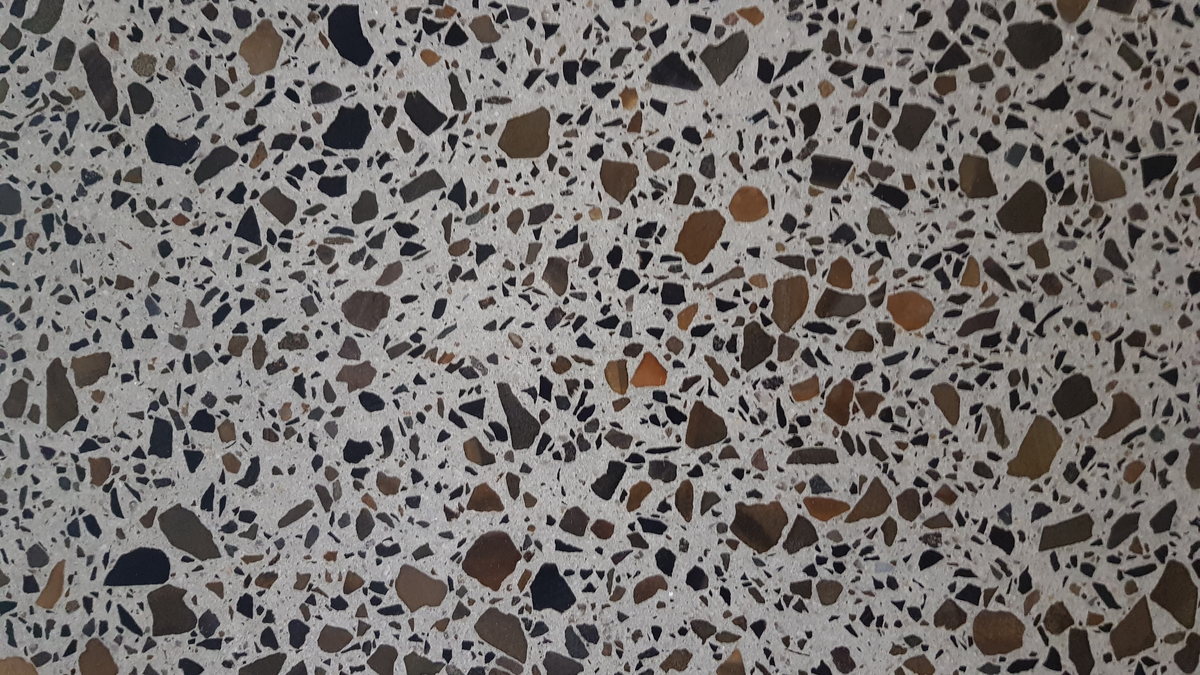
Polished concrete is not a product applied to your floor. It is your floor, ground back and finished. Whatever is in the slab — the aggregate, the cement colour, pour lines, patches, the spot where a plumber chased a pipe — is what you will see.
On a new build this can be planned for. On an existing slab it cannot be changed, only revealed, and no sample can tell you exactly what will appear. Our guides on why samples cannot predict a finished floor and whether an existing slab can be polished cover this in detail. If you need a uniform, predictable surface, this is the point where polished concrete is already the wrong choice.

Cracks are normal, and they show
Concrete cracks. Slabs are placed with control joints to encourage shrinkage cracking to happen along neat lines, and they do not always obey. A polished finish does not hide a crack; it makes a clean floor around it. Cracks can be filled and tidied, and many people come to like them, but they will be visible. Cracks and repairs in polished concrete explains what can and cannot be done.
The floor’s history shows through
Old tile adhesive, paint, oil, even the pattern of the tiles that used to be there can appear in the finished surface as ghosting. It can often be reduced; it is frequently permanent. If a slab has carried something for years, assume some of it stays.
It is hard, and it can be cold
Dropped glasses break. Standing for long periods is less comfortable than on timber. There is no give in it. Rugs in living areas are the normal answer, and most owners use them.
Temperature cuts both ways. A slab stores heat from winter sun or in-slab heating and releases it slowly, which is why polished concrete suits passive-solar homes. Without a heat source, it is a cold floor in winter. Tiles over the same slab would be too, but a timber or carpeted floor would not.
Sound
A large room with a hard floor and hard walls echoes. Polished concrete contributes to that exactly as tiles do. Soft furnishings, rugs and curtains fix it; a bare open-plan room with a polished floor will be lively.
It can be slippery when wet
A smooth, sealed concrete floor behaves like any smooth hard floor when water, oil or dust is on it. No finish should be called non-slip or safe when wet, and anyone who tells you otherwise is guessing. Slip performance depends on the finish, the sealer, the contamination and the conditions, and where a particular rating matters it has to be specified and tested. Our slip-resistance guide sets out how this is assessed in Australia.
It is not maintenance-free
Grind-and-seal floors rely on a sealer, which wears with traffic and needs re-coating — the interval depends on use, not on a calendar. Mechanically polished floors are densified rather than coated, so there is no film to replace, but they still need the right cleaning products, regular dust removal (grit is what scratches them) and attention to spills. Our maintenance guide covers what each finish actually needs. Anyone describing concrete as maintenance-free is selling, not advising.
Staining and etching
Concrete is alkaline, and acids mark it: wine, citrus, vinegar, some cleaning products. A sealer slows this down and a well-maintained floor resists everyday spills well, but nothing makes concrete immune. Spills that sit overnight can leave a mark that is in the surface, not on it. Mats under pet bowls and prompt wiping are not optional with this floor.
The work itself is disruptive
Grinding is noisy and, even with industrial extraction and containment, not dust-free. The process takes days, there are cure times before the floor can be walked on and furnished, and rooms have to be empty. On a renovation with the family in the house, that is a real cost in convenience that a tiler’s day of laying does not carry in the same way.
Fixes are harder than with tiles
You cannot replace a section of polished concrete the way you swap a cracked tile. A localised repair reads as a repair. A damaged area may mean refinishing a whole zone, and in some cases re-grinding the floor. The trade-off is that there is nothing to come loose, drum or crack from a dropped pan — but when something does go wrong, it is a bigger job.
Cost surprises come from preparation, not the polish
The polishing itself is predictable. What is not is the slab: adhesive to grind off, levelling, moisture problems, patches that behave differently. Small areas carry the same machinery setup as large ones, so they cost more per square metre. If a quote looks unusually cheap, check what preparation it includes — that is where the surprises live. What affects polished concrete cost goes through every driver.
Floors it does not suit
- Houses with no slab — a timber floor on stumps or bearers cannot be polished. There is nothing to polish.
- Slabs in poor condition: heavily patched, soft, crumbling, or with moisture problems that have not been resolved.
- Rooms that need a certified wet-area system, where a conventional tiled approach is the simpler, better-understood answer.
- Spaces where a precise, uniform colour is essential.
- Very small, cut-up areas, where the fixed costs outweigh the benefit.
- Anywhere the owner is not prepared to live with cracks, variation or the ghost of what used to be on the floor.
How we manage the downsides — and what we will tell you
We look at the slab before we quote, and we say which finish it suits — including when that is grind and seal rather than a full polish, an overlay, or tiles. Where it helps, we agree the look from samples and a test area while being clear about what a test area cannot promise. We specify the sealer for the use, not the showroom. And we put the realistic conversation about cracks, ghosting and variation before the work, in writing, so nobody is surprised afterwards.
Is it still worth it?
For the right slab and the right owner, yes — which is most of the people who ask us. A sound slab in an open-plan home, an owner who likes the character of concrete and understands its upkeep, a design that uses the thermal mass: that floor will outlast most alternatives and need less of the daily fuss. For the wrong slab or the wrong expectations, no amount of skill makes it the right choice, and we would rather tell you that first.
Frequently asked questions
Does polished concrete crack?
The slab does, as all concrete does, and the finish shows it. Control joints and good slab design reduce random cracking but do not eliminate it. Cracks can be filled and tidied; they cannot be made invisible.
Is polished concrete cold in winter?
Without a heat source, yes — like any hard floor on a slab. With winter sun through glass or in-slab heating, the slab’s thermal mass stores and releases that heat, which is an advantage.
Can polished concrete be stained?
Yes. Sealers and densifiers help a well-maintained floor resist everyday spills, but acids such as wine, citrus and some cleaners can etch or mark the surface if left. Nothing makes concrete immune.
Is polished concrete hard to maintain?
No, but it is not maintenance-free. Sealed floors need re-coating at an interval set by traffic; polished floors need the right cleaning routine, dust kept off and spills dealt with promptly.
Can every concrete slab be polished?
No. Slabs in poor condition, with unresolved moisture problems, or finished poorly when poured may not polish well or at all. Grind and seal or an overlay is sometimes the honest alternative — and sometimes it is tiles.
Not sure whether your slab is a good candidate? Send photos — including the parts you are worried about — and we will tell you straight, including when the answer is a different finish. Get a free quote.
This guide is general information based on our experience on the Mornington Peninsula, not advice for a specific project. Every slab is different, product performance depends on the manufacturer’s specifications, and we assess each floor on site before quoting.
Related pages
Thinking about a concrete floor?
Tell us about your space and we will come back to you with a free, no-obligation quote.